Electricity prices are rising, summers are getting hotter, and your AC seems to run nonstop. If you want air conditioner tips to lower your electricity bill fast, you are in the right place. Here’s a guide that cuts through myths and hands you simple, proven actions you can use today. Whether you’re on a humid coast or in a dry inland climate, the steps below work globally, are easy to follow, and deliver savings without sacrificing comfort.
Set Your Thermostat Strategically: Small Changes, Big Savings
The fastest way to cut cooling costs is also the simplest: adjust your thermostat with intention. A 1°C (about 2°F) increase can reduce AC energy use by roughly 6–10%, according to multiple energy efficiency studies and utility programs. For most homes, a comfortable, efficient target is 24–26°C (75–78°F) when occupied, and 26–28°C (78–82°F) when you are away or sleeping. If humidity is high, using “Dry” or dehumidification mode can improve comfort at slightly warmer set points by reducing moisture in the air.
Set schedules. Program your thermostat to match your routine: cooler when you are home and active, warmer when the house is empty. If you have a smart thermostat or an AC with built-in scheduling, set weekday and weekend routines. Add a small “deadband” (the range around the set point where the system does not cycle) to reduce short cycling and save wear on your compressor.
Pair airflow with temperature. Ceiling or pedestal fans can make you feel 2–4°C cooler through wind chill, letting you raise the set point without feeling hotter. Keep fan direction set to blow air downward during summer. Turn fans off when you leave the room; they cool people, not spaces.
Avoid the “icebox” impulse. Dropping the thermostat to 18–20°C (64–68°F) will not cool your home faster; it only makes the AC run longer. Instead, pre-cool gently before the hottest part of the day and close shades on sun-facing windows to reduce heat gain. In humid regions, aim for indoor relative humidity around 40–60% for comfort and health.
Well, here it is—a quick, simplified view of how modest thermostat shifts can impact energy use and cost. Actual savings vary by climate, insulation, and equipment efficiency.
| Thermostat Setting | Estimated Energy Use vs. 24°C (75°F) | Typical Savings Potential | Notes |
|---|---|---|---|
| 22°C (72°F) | +12–20% | — | Feels cool, higher runtime, especially in humid climates. |
| 24°C (75°F) | Baseline | 0% | Balanced comfort for most households. |
| 26°C (78°F) | −12–20% | 6–10% per °C (approx.) | Use a fan to keep comfort level high. |
| 28°C (82°F) | −24–35% | 12–20% vs. 24°C | Best for away/sleep settings in many homes. |
Pro tip: If you run a dehumidifier, do not over-dry below 40% RH. Extremely low humidity can feel uncomfortable and increase energy use. For more thermostat best practices, check the U.S. Department of Energy guidance: energy.gov/energysaver/thermostats.
Maintain and Upgrade for Efficiency: Filters, Coils, Seals, and Smart Tech
A clean, well-tuned AC uses less electricity and cools better. Begin with filters. Dirty filters restrict airflow, forcing the system to run longer and potentially freezing coils. In dusty or high-pollen areas, check filters monthly and replace or wash them every 30–60 days during heavy use. Such a simple habit can save 5–15% on cooling costs, based on utility program audits and my field experience helping households optimize AC performance.
Next, clean the coils. The outdoor condenser coil needs free airflow; brush away debris, rinse gently with a hose, and keep at least 60 cm (2 ft) of clearance around the unit. Indoors, inspect the evaporator coil and blower wheel annually; a qualified technician can deep-clean these components. Coil fouling can cut efficiency drastically—sometimes 10–30%—especially in polluted or coastal environments.
Seal the leaks you cannot see. If your home uses ducted air conditioning, leaky ducts can waste 20–30% of cooled air, according to the U.S. DOE. Ask for a duct leakage test and seal gaps with mastic (not just tape). Ensure the return grille is unobstructed and that doors have undercuts or transfer grilles to let air flow back to the return path.
Verify refrigerant charge and airflow. Low refrigerant or incorrect airflow reduces capacity and increases costs. A certified technician can measure superheat/subcooling, test static pressure, and set fan speeds. Ask for a performance report—not just a “top-up.”
Smart controls pay back. A smart thermostat or a smart plug for window units can automate schedules, adjust for occupancy, and integrate with weather forecasts. Many models use machine learning to reduce runtime without sacrificing comfort. What’s interesting too is that inverter (variable-speed) ACs, instead of turning on and off, modulate to match the load, often cutting energy use 20–40% versus fixed-speed systems. When shopping, compare seasonal efficiency ratings like SEER/SEER2, EER, or the European SEER. Look for ENERGY STAR or equivalent regional labels for verified performance: energystar.gov.
Optimize Your Space: Insulation, Sun Control, and Habits That Cut Load
Your home’s heat load—the total heat entering your rooms—decides how hard your AC works. Reducing load is often cheaper than upgrading equipment. Tackle the sun first. Close blinds or curtains on east and west windows during morning and afternoon peaks. Consider reflective window films or solar shades that can block 30–60% of solar heat gain. Exterior shading (awnings, shutters, pergolas, or trees) is even more powerful, because it stops heat before it enters the glass.
Stop air leaks. Weatherstrip doors and windows; seal gaps around plumbing, cable penetrations, and attic hatches. A thin gap under a door might look harmless, but dozens of small leaks add up. In hot climates, sealing reduces infiltration of warm, humid air—making your AC’s job easier and helping maintain healthy indoor humidity.
Insulate smartly. If you have an accessible attic or roof space, adding insulation can drop indoor temperatures and stabilize comfort. Cool roofs or light-colored roofing can reflect sunlight and reduce cooling demand in many regions. For guidance on cool roofing and materials, see the Cool Roof Rating Council: coolroofs.org.
Be smart with appliances. Ovens, dryers, and hot showers add heat and humidity. Shift heat-generating tasks to the morning or evening. Cook with lids on, use the exhaust fan, and air-dry laundry when possible. Switch to LED lighting; they produce far less heat than incandescent bulbs. Place heat sources (lamps, electronics) away from the thermostat so they do not trick it into overcooling.
Leverage natural ventilation when conditions allow. In dry or mild evenings, open windows to purge hot air and bring in cooler air, then close up and shade early the next day. In humid climates, ventilate selectively to avoid bringing in too much moisture. Keep interior doors closed to maintain zones: if you are only using the living room, do not cool the entire house.
Finally, stack habits for compounding gains. Combining shading, sealing, and a 1–2°C thermostat increase can multiply savings. The International Energy Agency notes that raising cooling efficiency and reducing loads can deliver large, fast wins for household energy use: iea.org.
Buying or Replacing? Choose the Right AC Size and Features
If your system is old, unreliable, or oversized/undersized, replacement may save more than tweaks. Right-sizing matters. An oversized AC cools the air quickly but shuts off before removing enough humidity, leading to clammy discomfort and frequent starts that waste energy. An undersized unit runs constantly and still struggles. Ask an installer for a proper load calculation (often called “Manual J” in North America or equivalent methods elsewhere) that considers insulation, window area, orientation, occupancy, and local climate—not just floor area.
As a rough rule of thumb (not a substitute for a load calc), many modern homes need 60–100 watts of cooling capacity per square meter (or 20–35 BTU per square foot), depending on climate and insulation. Well-insulated spaces with good shading need less; sun-exposed rooms with large windows need more. For multi-room flexibility and high efficiency, consider inverter-based ductless mini-splits, which can achieve high SEER ratings and modulate capacity to match the load precisely.
Focus on features that save energy every day. Look for variable-speed compressors and fans, wide operating ranges, quiet modes (encouraging you to use efficient settings), and smart connectivity. Check independent labels and databases: ENERGY STAR (North America), CE marking and energy labels (EU), BEE star ratings (India), MEPS labels (Australia/New Zealand), etc. Higher SEER/EER units typically cost more upfront but can pay back in 2–5 years in warm climates, especially where electricity prices are high.
Installation quality matters too—don’t forget it. Correct refrigerant charge, proper line set length, vacuuming, condensate management, and airflow tuning are as important as the equipment itself. Ask for a commissioning report. Maintain clearance around outdoor units, and shade them if possible without blocking airflow. For comfort standards and indoor air quality guidance, see ASHRAE resources: ashrae.org.
Q&A: Fast Answers to Common AC Savings Questions
Q1: What is the best temperature to set my AC for savings without losing comfort?
For most households, 24–26°C (75–78°F) when you are home is a strong balance. Raise it to 26–28°C (78–82°F) when you sleep or are away. Combine this with a ceiling fan so it feels 2–4°C cooler. If humidity is high, use Dry mode or ensure your system is sized and set to remove moisture effectively. Remember: every 1°C (2°F) increase can cut AC energy use by roughly 6–10%, making small changes very impactful over a month.
Q2: Do smart thermostats actually lower bills?
Yes, when used properly. Smart controls automate schedules, reduce runtime when you are out, and can pre-cool efficiently before peak heat. Many also provide insights, like how long it takes your home to reach set point, letting you fine-tune settings. Savings vary (often 5–15%), but in hot climates or for larger homes, smart automation can pay back quickly. For window or portable units, smart plugs with temperature scheduling offer similar benefits at a low cost.
Q3: Is it better to keep the AC running all day or turn it off when I leave?
In most cases, it is cheaper to let your home warm up while you are gone and cool it before you return. Use schedules or geofencing on a smart thermostat. If your home heats very quickly or you have pets or sensitive equipment, raise the set point instead of turning the system off completely. Pre-cool gently (not drastically) before peak afternoon heat, and keep blinds closed to reduce heat gain while you are away.
Q4: How often should I change filters and get maintenance?
Check filters monthly during cooling season and replace or wash them every 30–60 days, more often in dusty areas or homes with pets. Schedule professional maintenance annually to clean coils, verify refrigerant charge, test airflow and static pressure, and inspect electrical components. These steps prevent efficiency loss (often 10–30% from dirt and leaks), improve comfort, and extend equipment life. If your energy bill suddenly spikes, inspect filters first—it is the fastest low-cost fix.
Conclusion: Make Cooling Cheaper, Starting Today
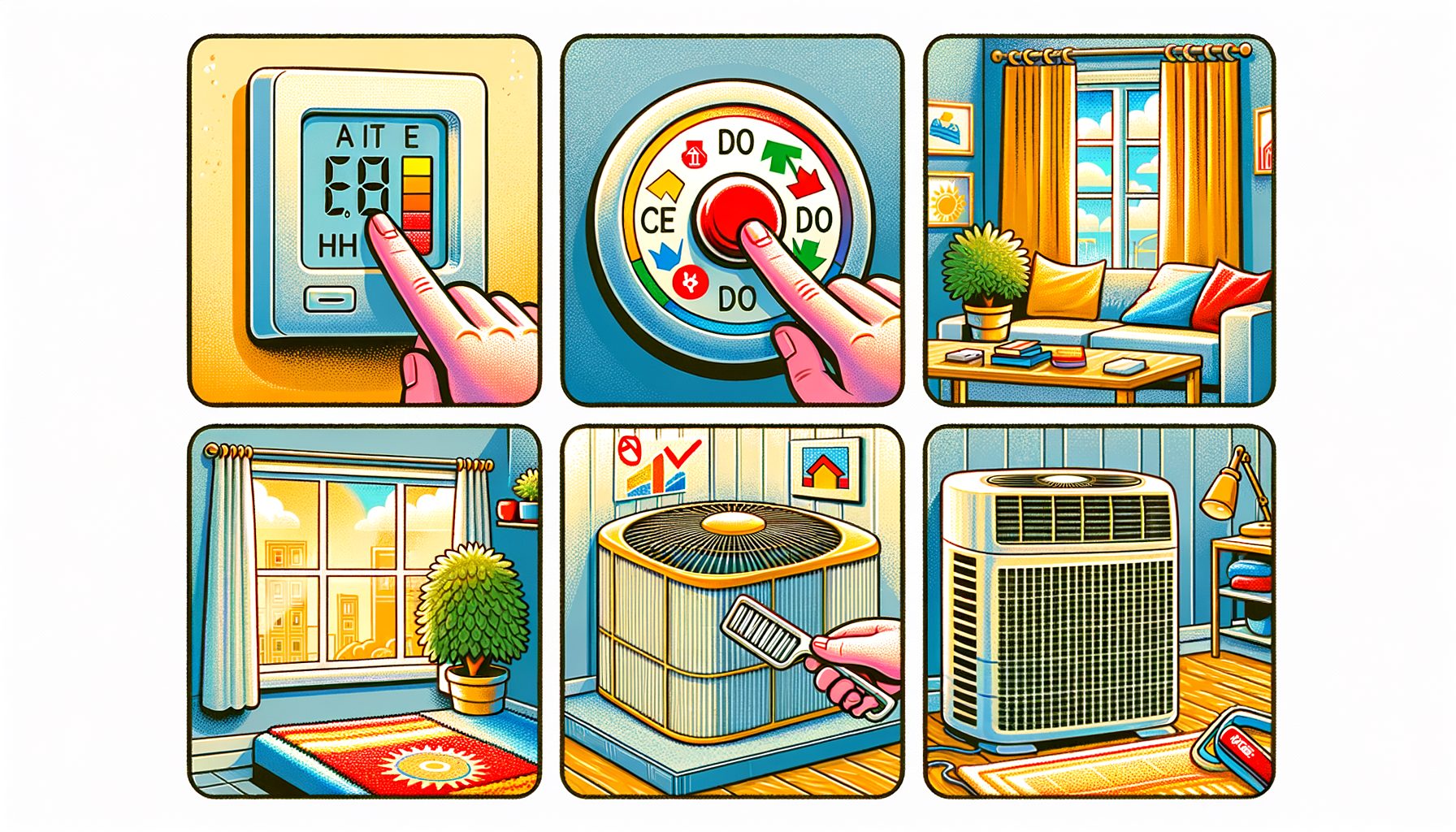
You don’t need a full renovation or a new AC to see results. The guide you just read shows how thermostat strategy, basic maintenance, load reduction, and smarter equipment choices can quickly bring bills down. Start with small, high-impact actions: set your thermostat to 24–26°C (75–78°F), run a fan to boost comfort, close shades on sunny windows, and clean or replace your filter. Then build momentum—seal air leaks, schedule your AC, and evaluate whether an inverter unit or smart controls could amplify your savings. These air conditioner tips to lower your electricity bill fast are practical in any region and stack together for compounding benefits.
Take action now. Choose one step from this list and put it in place today—set a schedule, raise your set point by 1°C, or wash your filter. Tomorrow, add another habit, like shading windows by midday. If you are planning a purchase, ask for a proper load calculation and compare efficiency ratings. Bookmark this guide, share it with a friend or neighbor, and track your kWh usage over the next month to see the difference.
Cooling smarter is not just about comfort; it is about control—of your costs, your energy footprint, and your indoor environment. You can do this with clear steps and a little consistency. What is the first change you will try today? Make it small, make it simple, and watch your savings—and comfort—grow.
Sources
U.S. Department of Energy, Energy Saver – Thermostats and Control Systems: https://www.energy.gov/energysaver/thermostats
ENERGY STAR – Central Air Conditioners and Air Source Heat Pumps: https://www.energystar.gov/products/central_air_conditioners
International Energy Agency – The Future of Cooling: https://www.iea.org/reports/the-future-of-cooling
ASHRAE Standards and Guidelines (comfort and IAQ): https://www.ashrae.org/technical-resources/standards-and-guidelines
Cool Roof Rating Council – Roof reflectance and emissivity resources: https://coolroofs.org/