High bills, weak cooling, and constant thermostat tweaks aren’t “just summer problems.” They often come from avoidable air conditioner mistakes. The upside: a few smart changes can lower energy use, cut costs, and make your space cooler and healthier. In this guide, you’ll see the most frequent AC errors, why they happen, and how to fix them with clear, practical steps you can take today. Ready to save energy and stay cool without sacrificing comfort? Let’s dive in.
The real cost of common air conditioner mistakes (and how to spot them)
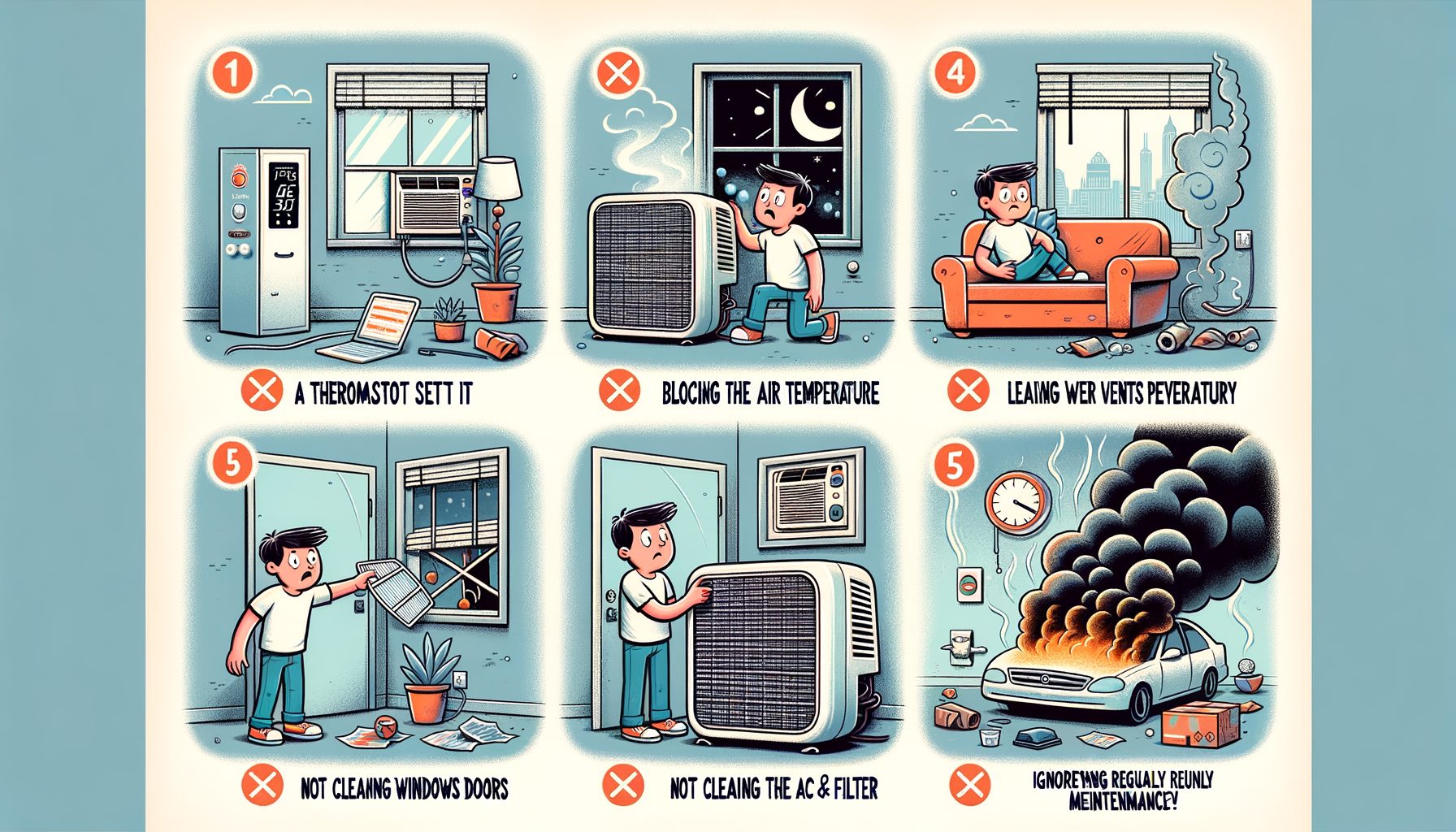
Small habits can cause big energy waste. Running an AC with a clogged filter, cranking the thermostat to extreme settings, or blocking vents with furniture makes the system work harder, wear out sooner, and cost more. The tricky part is that many of these mistakes hide in plain sight. You might feel “okay” temps yet miss the quiet inefficiencies—leaky ducts, sun blasting through windows, or a fan set to the wrong mode—that inflate your bill month after month.
Why care? Because fixing just two or three issues can bring instant comfort and lower costs. According to the U.S. Department of Energy, simple thermostat adjustments and regular maintenance can reduce seasonal cooling bills in a meaningful way. In warm regions, those savings add up fast. Here’s a quick snapshot of typical mistakes and their estimated impact, based on respected energy sources and field studies:
| Mistake | Estimated Energy Penalty | Notes / Sources |
|---|---|---|
| Skipping thermostat schedules | 5–10% higher annual cooling costs | DOE notes 7–10% savings with smart setbacks |
| Dirty or clogged air filter | 5–15% more energy use | ENERGY STAR recommends frequent filter changes |
| Leaky or poorly insulated ducts | Up to 20–30% air loss | Common in older homes; sealing can pay back fast |
| Cooling empty rooms / blocked vents | Varies, often noticeable comfort loss + higher run time | Airflow balance matters for system efficiency |
| Unshaded windows / high sun load | 10–25% higher cooling demand in sunny zones | Shades/films reduce heat gain and glare |
What does this look like in real life? Picture a small apartment with west-facing windows that bakes every evening. Add reflective shades, use a 1–2°C (2–4°F) thermostat setback while out, swap a dirty filter, and the space often feels cooler with fewer AC hours. Multiply that across a summer and the result is less stress on your system and your wallet. For fundamentals and best practices, explore resources from the U.S. Department of Energy at energy.gov and ENERGY STAR at energystar.gov.
Thermostat truths: set it, schedule it, and stop the myths
Thermostats are the brain of your cooling system, yet many people use them in ways that waste energy. The most common myth says that setting a much lower temperature cools the home faster. It doesn’t. Your AC cools at a steady rate; extreme settings merely keep it running longer than necessary. Well, here it is: pick a realistic target—often 24–26°C (75–78°F) in most climates—then use schedules or geofencing to raise the setpoint when you’re away and bring it back before you return.
Here’s a practical setup for apartments and houses alike: choose your preferred comfort temperature for occupied hours, then schedule a 1–2°C (2–4°F) increase when you’re asleep or out. If your climate is dry or you use ceiling fans, you might push the setback further and still feel fine. Fans don’t lower the air temperature; they boost evaporative cooling on your skin, so you feel comfortable at higher setpoints. The U.S. Department of Energy notes that strategic setbacks can save around 7–10% annually on heating and cooling when maintained consistently for roughly eight hours.
Then this: set the system fan to Auto. Leaving the fan on “On” makes it run nonstop, can add humidity back into the space, and increases energy use. In humid regions, comfort takes a hit. If you have a smart thermostat, enable adaptive recovery so it starts cooling early enough to reach your target by wake-up time without overcooling. Geofencing is another win—when your phone leaves home, the thermostat can nudge the temperature up to save energy, then cool down as you return.
Sensor placement matters as well. A thermostat near a sunny window or hot hallway can misread the true temperature and overcool the home. What’s interesting too: remote room sensors (available with many smart thermostats) balance temperatures across spaces so your bedroom or home office hits the right target. Not sure where to begin? ENERGY STAR’s connected thermostat criteria provide a reliable guide to features that deliver consistent savings.
Maintenance that pays: filters, coils, and professional tune-ups
Even the best air conditioner becomes inefficient without basic care. Airflow is the AC’s lifeblood, and a dirty filter chokes it. When airflow drops, coils can get too cold, icing forms, and the system runs longer for worse results. Inspect filters monthly during heavy use and replace or wash them every 1–3 months depending on dust, pets, and pollution levels. One habit can cut 5–15% in wasted energy and reduce breakdowns.
Coils matter too. The indoor evaporator coil absorbs heat; the outdoor condenser coil releases it. Dust, pollen, and debris reduce heat transfer efficiency. Every season, gently clear leaves and dirt from the outdoor unit and maintain at least 60 cm (about 2 feet) of clearance around it. Indoors, ensure the coil and blower are clean; a professional technician can handle deeper cleaning, refrigerant checks, and airflow measurements (CFM) to confirm your system is within spec.
A professional tune-up once a year works like a checkup for your AC. A good tech will inspect electrical connections, test capacitors, verify refrigerant charge, measure temperature split (often 8–14°C / 15–25°F across the coil), and confirm the condensate drain isn’t clogged. Hidden problems that increase energy use—like a slow fan motor, low refrigerant from a small leak, or a failing contactor—are caught early. Cheap insurance.
Real-world example: a small family home reported weak cooling and higher bills. A quick service found two problems—an almost-black filter and a partially blocked outdoor coil. After replacing the filter and cleaning the unit, run times dropped, room temperatures stabilized, and humidity control improved. If you’re new to maintenance checklists, start with the DOE’s AC basics at energy.gov and consider an annual service plan with a trusted local provider.
Airflow and home envelope: vents, ducts, sunlight, and humidity
Comfort depends on more than the AC unit—it’s also about how air moves and how much heat sneaks into your home. First, clear your vents. Don’t block supply registers or returns with sofas, rugs, or curtains. Balanced airflow helps every room cool evenly. If a room is always hotter, look for closed or undersized vents, leaky windows, or excessive sun. A small tweak, like using a floor fan to push cool air deeper into a space, can make the thermostat work less.
Ducts create another common issue. In many homes, 20–30% of conditioned air leaks into attics or crawl spaces, especially at joints and seams. Sealing ducts with mastic (not just tape) and adding proper insulation can dramatically improve performance. When you notice uneven rooms, whistling sounds, or dusty supply air, ask a technician about a duct leakage test. A modest AC can feel stronger without changing the equipment.
The building “envelope” (windows, doors, insulation, and air sealing) determines how hard your AC must work. Sunlight is powerful; unshaded windows add a surprising cooling load. Use reflective shades, thermal curtains, awnings, or window films to block afternoon heat. If you rent, removable films and thick curtains bring big wins without permanent changes. In humid regions, moisture control is vital. High humidity makes rooms feel stuffy and pushes people to set colder temperatures. Address moisture at the source (bath fans, kitchen vents, windows closed on humid days) and add a dehumidifier if needed, and higher, more efficient setpoints often feel great.
What about right-sizing and upgrades? An oversized AC cools fast but doesn’t run long enough to dehumidify, leaving clammy air. An undersized one runs nonstop. When replacing, ask for a proper load calculation (Manual J or local equivalent), not a square-footage guess. Modern inverter-driven systems and high-efficiency heat pumps (check SEER2 or local ratings) often deliver better comfort with lower energy use. For policies and global trends on cooling demand and efficiency, see the International Energy Agency’s guidance at iea.org.
FAQs: quick answers to big AC questions
Q1: What’s the best temperature to set in summer?
Most households are comfortable around 24–26°C (75–78°F). Start at 26°C (78°F), use ceiling fans in occupied rooms, and nudge down by 1°C (2°F) only if needed. When you’re away for several hours, raise the setpoint by 1–3°C (2–5°F). Consistency beats constant manual adjustments. For more, see DOE thermostat guidance at energy.gov.
Q2: How often should I change my air filter?
Check monthly during heavy use and replace or clean every 1–3 months. Homes with pets, smokers, or high dust may need monthly changes. A clean filter protects your compressor, improves airflow, and reduces run time. When vents feel weak or dust builds up fast, the filter is likely past due.
Q3: Does turning the thermostat way down cool faster?
No. Air conditioners cool at a fixed rate. Extreme settings only make the unit run longer and risk overcooling or excess humidity. Use a realistic target and let schedules or geofencing manage setbacks automatically. Pair with fans to feel cooler at higher, cheaper setpoints.
Q4: How can I tell if my ducts are leaking?
Clues include uneven room temperatures, dust streaks near ducts, whistling sounds, and higher bills despite normal weather. A professional can run a duct leakage test to quantify the problem. Sealing with mastic and insulating ducts in unconditioned spaces can yield rapid comfort and efficiency gains.
Conclusion: your cool, efficient home starts with a few smart moves
Everyday habits—thermostat myths, skipped filter changes, blocked vents, duct leaks, and unchecked sunlight—combine to waste energy and undermine comfort. The fix is straightforward: choose a sensible setpoint and schedule, keep filters and coils clean, clear airflow pathways, manage sun and humidity, and ensure ducts and system sizing are right. Put them together and the effects compound. Smoother AC cycles, more even rooms, and a calmer energy bill follow.
Take action today with a 30-minute home cooling check: set your thermostat to a realistic target and add a schedule, inspect and replace the filter, clear 60 cm (2 feet) around the outdoor unit, open and un-block vents, and close blinds on sun-exposed windows. When deeper issues appear—hot/cold rooms, noisy ducts, or high humidity—book a professional tune-up and ask about duct sealing and load calculations. For buyers planning an upgrade, compare SEER2 ratings, consider inverter or heat pump options, and look for rebates from local utilities or government programs. Reliable resources include ENERGY STAR at energystar.gov and the DOE Energy Saver hub at energy.gov.
Cooling smarter is about comfort and control—getting the temperature and humidity you want with less effort and less cost. Start small, measure results for a week, and build momentum. Your future self (and your energy bill) will thank you. Ready to try one change right now—will it be a new schedule, a fresh filter, or closing those sunny blinds? Make the move today, enjoy the difference tonight, and keep the cool going all season long.
Sources
– U.S. Department of Energy – Air Conditioning: https://www.energy.gov/energysaver/air-conditioning
– U.S. Department of Energy – Thermostats: https://www.energy.gov/energysaver/thermostats
– ENERGY STAR – Cooling Guidance: https://www.energystar.gov/cooling
– International Energy Agency – Cooling: https://www.iea.org/topics/cooling