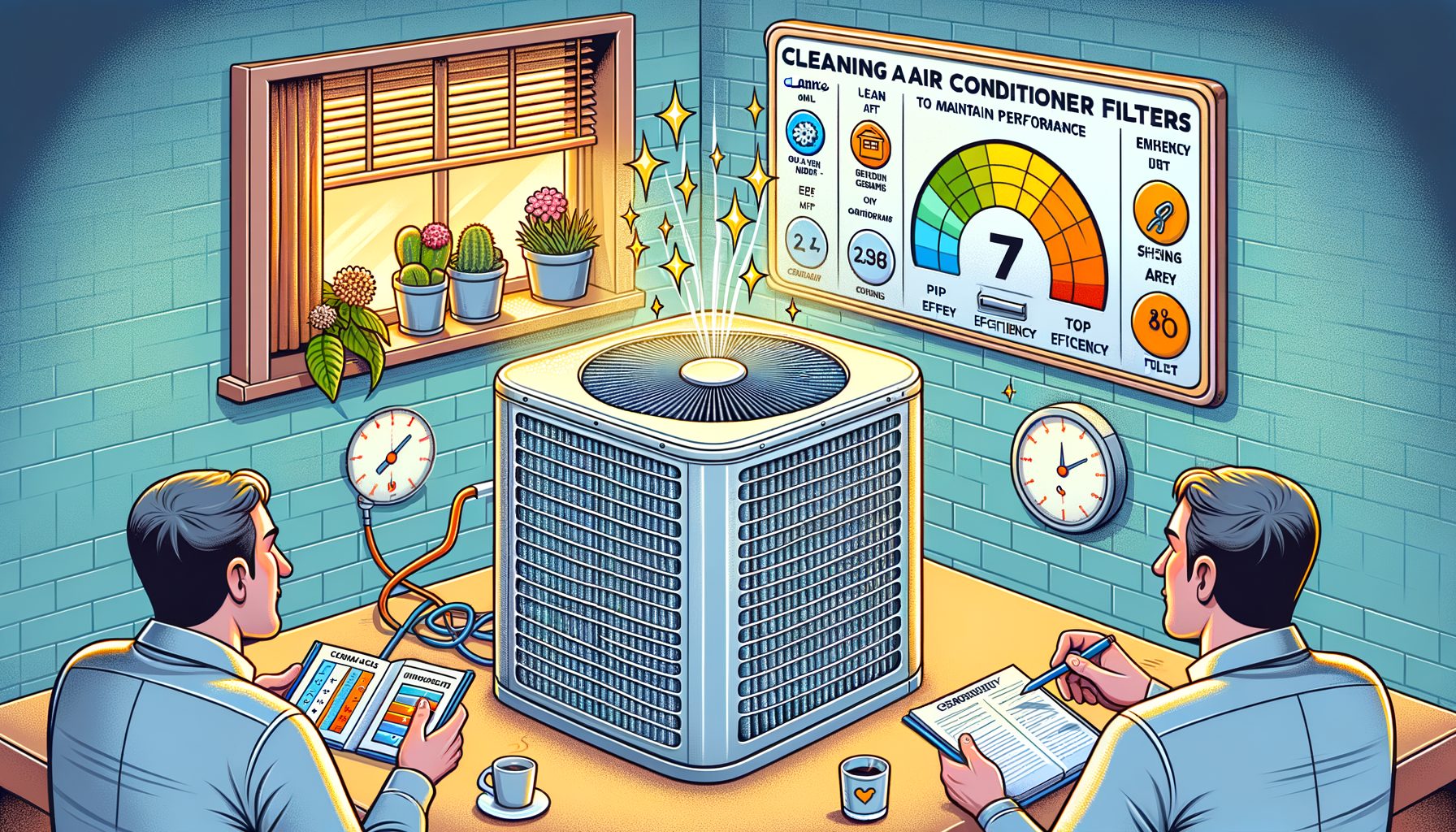
When summer hits—or a surprise heatwave rolls in—the same question pops up: how often should you clean an air conditioner filter to keep efficiency high? AC humming yet the room still feels stuffy? An energy bill that spikes? A clogged filter is often to blame. As airflow drops, the system is forced to work harder and comfort slips. The good news is simple: a quick, low-cost habit—checking and cleaning or swapping the filter—can restore performance fast. In the pages ahead, expect clear timelines, easy steps, and clever tracking tips so the house stays cooler, the bills trend lower, and the air smells fresher.
Why Dirty AC Filters Cost You Money and Comfort
Your air conditioner’s filter is a small part with a big job. Dust, hair, pollen, and other particles are caught before they reach the evaporator coil. With a clean filter, air moves freely, the coil stays clean, and cooling efficiency stays high. Let that filter load up, and airflow slows. Then the blower works harder, the coil may get too cold and ice over, and the compressor runs longer to hit the same setpoint. Result: higher energy use, uneven cooling, and extra wear on expensive components.
Multiple reputable sources, including the U.S. Department of Energy, report that replacing or cleaning a clogged filter can cut air-conditioner energy use by 5% to 15%. For a home spending a few hundred dollars per cooling season, that’s real money. What’s interesting too: performance isn’t the only concern. Dirty filters also affect indoor air quality (IAQ). Allergies, pets, or proximity to traffic and construction can magnify the problem, recirculating irritants and worsening symptoms. In extreme cases, dust bypasses a warped or overloaded filter and settles on the coil, forming a sticky mat that’s hard to remove and reduces heat transfer.
Comfort suffers as airflow is restricted. Hot and cold spots appear, vents feel weak, and cooldowns take longer. You may find yourself constantly nudging the thermostat lower—an early warning the system is straining. Over time, that stress can shorten equipment life and increase the risk of breakdowns during peak heat. The simplest prevention is to match filter maintenance to your environment and usage. A timely clean or swap restores airflow, stabilizes temperatures, and lets the system run the way it was designed to—smooth, quiet, efficient.
How Often to Clean Air Conditioner Filters: The Clear Answer
No single schedule fits every home, climate, or filter. Well, here it is: a practical rule that works for most households—check monthly, act every 1–3 months. If you see a visible gray film, weaker airflow, or can’t read the filter media through the dust, it’s time. Washable filters (common in mini-splits and window units) should be rinsed monthly during heavy use. Disposable pleated filters in central HVAC typically get replaced every 60–90 days in average conditions—sooner with pets, allergies, smokers in the home, or heavy outdoor dust.
Filter type matters. Low-cost fiberglass filters often need replacing every 30 days because they capture less and clog faster. Pleated MERV 8–12 filters generally last 60–90 days. High-MERV options capture finer particles but can restrict airflow if the system isn’t designed for them; follow the manufacturer’s guidance. For ductless mini-splits, the mesh pre-filter is usually washable and should be cleaned monthly during summer and other heavy-use periods. If your mini-split includes a fine or deodorizing insert, inspect monthly and replace per the manual.
Usage and environment weigh just as heavily. If the AC runs 8–12 hours daily, expect more frequent maintenance than a light-use household. Hot, dusty, or coastal climates load filters faster with salt, sand, and particulates. Pet owners—especially with long-haired breeds—should plan on shorter intervals. Then this: use the table below as a starting point and adjust based on visual checks and performance.
| Home/Usage Scenario | Recommended Interval | Notes |
|---|---|---|
| Average home, pleated filter (MERV 8–11) | Every 60–90 days | Check monthly; replace sooner if visibly dirty |
| Fiberglass disposable filter | Every 30 days | Lower cost, lower capture efficiency |
| Mini-split or window unit (washable mesh) | Rinse every 30 days | More often in heavy use or dusty areas |
| Home with pets or allergies | Every 30–60 days | Consider higher MERV; monitor airflow |
| Smokers or urban pollution | Every 30–60 days | Odors and fine particulates load filters faster |
| Light seasonal use | At start of season, then every 90 days | Always begin with a fresh filter |
When in doubt, lean on your equipment manual and the monthly check habit. For extra assurance, set automated reminders in your phone or smart thermostat. And remember: act before peak weather, not during it—your comfort (and wallet) will thank you.
Simple Step-by-Step: Cleaning vs Replacing Different Filter Types
Before you begin, power off the system at the thermostat and, if accessible, the disconnect switch. That protects you and prevents the blower from pulling dust into the system while the filter is out. Wear a mask if you’re dust-sensitive.
Central HVAC with disposable pleated filter (most common):
1) Find the filter slot in the return grill or near the air handler/furnace. Note the airflow arrow—it should point toward the blower. 2) Slide out the old filter. If it’s gray or the pleats are packed, it’s overdue. 3) Insert the new filter with the arrow in the correct direction. 4) Write the date and MERV rating on the frame. 5) Restore power and restart. Pro tip: keep a spare on hand so a swap never gets delayed.
Washable filters (mini-splits, window units, some electrostatic panels):
1) Open the front panel—mini-splits lift; many window units slide or snap open. 2) Remove the mesh pre-filter gently. 3) Rinse with lukewarm water from the clean side outward to push debris off. Avoid high-pressure sprays that can damage the mesh. 4) If needed, add a drop of mild dish soap and use a soft brush. 5) Shake off excess water and air-dry fully before reinstalling. Do not use heat or intense direct sun that could warp plastic. 6) While you’re there, wipe dust from the intake grill and cabinet.
Electrostatic or “permanent” filters (for some central systems):
1) Remove and inspect monthly. 2) Rinse thoroughly and allow complete drying to prevent mold. 3) Reinstall with the airflow arrow aligned. If airflow still seems weak, discuss filter type and MERV rating with a technician.
Deep-clean considerations: a dirty evaporator coil or blower wheel can undermine a clean filter. If weak airflow persists, ice forms on the coil, or musty odors linger even after a filter clean, professional coil cleaning may be needed. For mini-splits, periodic pro cleaning of the indoor coil and fan often restores like-new performance.
Things to avoid: never run the system without a filter—dust will head straight for the coil and ducts. Skip bleach or harsh chemicals on filters or coils unless the product is labeled for HVAC use. Don’t bend frames or cram the wrong size into the slot; leaks around the edges let dust bypass the media entirely. And resist the urge to think “thicker is always better.” A high-MERV filter in a system not designed for it can raise static pressure and reduce airflow. When unsure, check your manual or consult a qualified technician.
Signals Your Filter Needs Attention (and How to Track It Like a Pro)
Your AC “speaks up” when the filter is overdue—if you know the signals. Watch for weaker airflow at vents, rooms that take longer to cool, extra dust on furniture or supply grills, a noticeable energy-bill spike, or rapid cycling. In some cases, frost appears on the indoor coil panel or the blower sounds like it’s working harder. Allergy flare-ups or musty smells can also point to a clogged or wet filter. See two or more at once? Check the filter immediately.
Prefer a proactive approach? Adopt a simple tracking routine. Pick a calendar rule—check the same date every month. Snap a quick photo during each check; side-by-side comparisons make buildup obvious. Mark the install date on the filter frame with a permanent marker. If you have a smart thermostat, enable filter reminders and adjust the interval for heavier or lighter use. Some advanced systems let pros measure static pressure; a significant rise across the filter from the clean baseline means it’s time. Handy with tools? An inexpensive manometer can replicate this: record clean-filter pressure, and replace when it increases by roughly 0.1–0.2 inches of water column or doubles from baseline, per manufacturer specs.
Context matters. Summer thunderstorms, nearby construction, wildfire smoke, or a new pet can change your timeline overnight. After any event that adds particles to indoor air, do an extra mid-month check. The goal isn’t perfection—consistency wins. A 60-second monthly habit prevents 60-minute headaches on the hottest day of the year.
Quick Q&A: Common Filter Questions
Q: Can I vacuum a disposable filter to extend its life? A: Not recommended. Vacuuming can damage the media and won’t remove embedded particles. Replace disposables; only clean filters labeled washable.
Q: Which MERV rating should I choose? A: Many homes do well with MERV 8–11. Higher MERV can improve capture of fine particles but may restrict airflow if the system isn’t designed for it. Check your manual or ask a pro.
Q: Do air purifiers replace AC filters? A: No. Purifiers can boost IAQ in specific rooms, but the HVAC filter protects the equipment and treats whole-home airflow. Use both if needed.
Q: Is it okay to cut a filter to fit? A: No. An improper fit causes bypass, dust on coils, and reduced performance. Always use the correct size.
Q: How do I know if a washable filter is dry enough to reinstall? A: It should feel completely dry to the touch with no cool, damp spots. In humid climates, allow extra drying time to prevent mold.
Conclusion: Make Filter Care a Habit—Your AC, Wallet, and Lungs Will Thank You
Bottom line: a clean filter keeps air moving, reduces energy use by 5–15%, safeguards equipment, and helps rooms feel cooler faster. You’ve seen why dirty filters cost comfort and cash, how often to clean air conditioner filters across different situations, step-by-step methods for washable and disposable types, and the telltale signs it’s time to act. You also picked up simple tracking tactics—monthly check-ins, photos, date labels, and smart reminders—that make consistency easy.
Ready for action? Set a recurring reminder today for a monthly filter check. Using disposables? Buy a three-pack so you always have a spare. Running a mini-split or window unit? Add a 10-minute wash session to your first-of-the-month routine. Before the next heatwave, give the system a head start with a clean filter and a quick wipe of the intake grill. If you’ve battled weak airflow, hot rooms, or high bills, this one habit can deliver a quick win you’ll feel by tonight.
Unsure about filter size, MERV rating, or whether your system can handle a higher-efficiency filter? Consult your manual or a qualified HVAC technician. For deeper dives, see trusted resources from the U.S. Department of Energy and the EPA linked below. Small actions add up: with clear air paths, your AC can do more with less—less time, less energy, less noise. Ready to breathe easier and spend smarter? Start with your filter, and let the cool, clean air prove it.
Helpful resources:
U.S. Department of Energy: Maintaining Your Air Conditioner
EPA: Guide to Air Cleaners in the Home
ASHRAE: Filtration and Disinfection Resources
Sources:
– U.S. Department of Energy. “Maintaining Your Air Conditioner.” Accessed 2025.
– U.S. Environmental Protection Agency. “Guide to Air Cleaners in the Home.” Accessed 2025.
– ASHRAE. “Filtration and Disinfection.” Accessed 2025.