
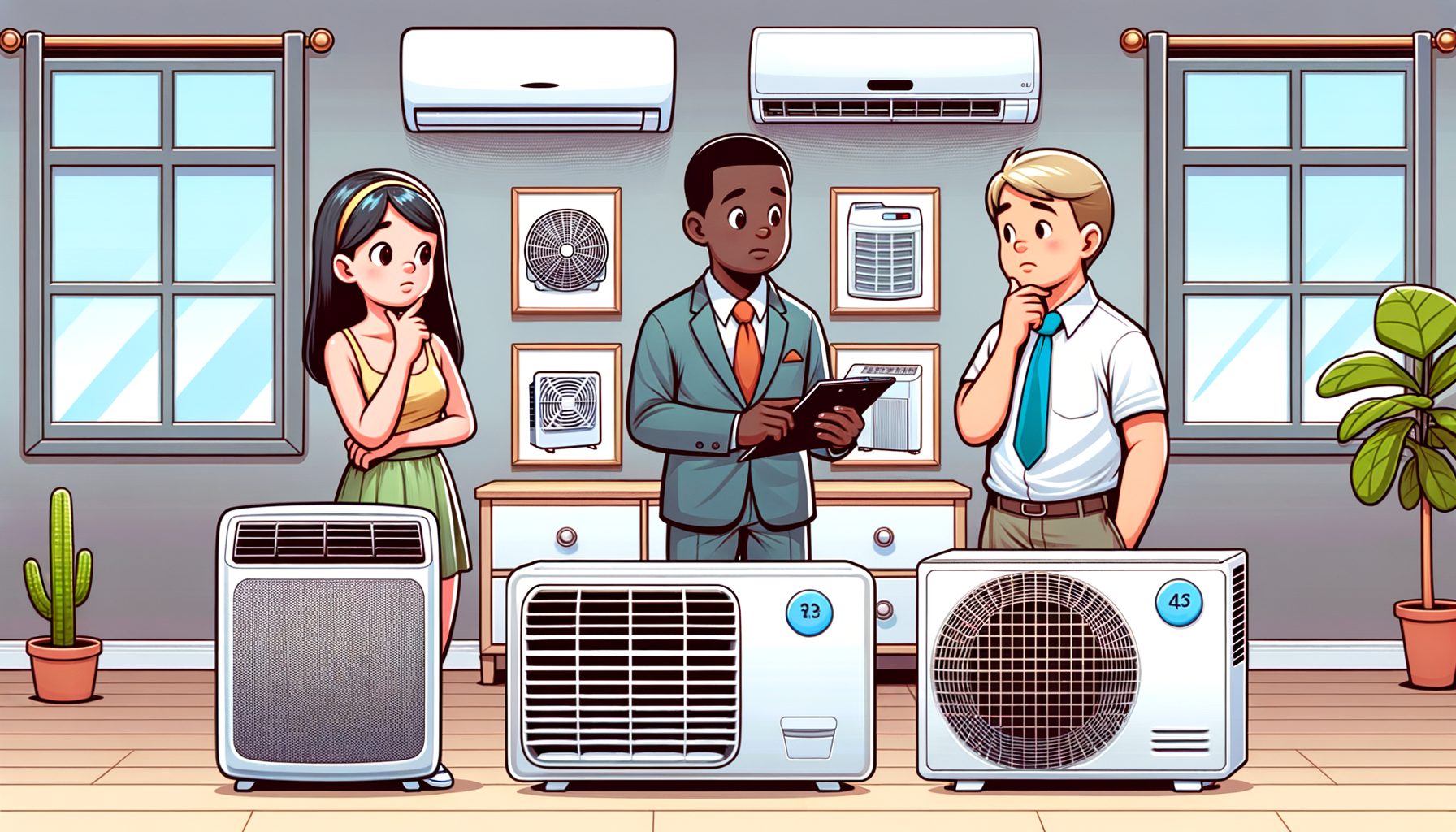
Buying your first air conditioner sounds simple—until you face a wall of acronyms, baffling sizes, and wide price ranges. Consider this your first-time air conditioner buyer’s guide, built to help you choose with confidence. In one place, you’ll see how to size an AC correctly, compare efficiency ratings like SEER2, pick the right type (window, portable, split, or central), and dodge rookie mistakes that inflate bills while weakening cooling. If you want a clear, data-backed, globally relevant answer, start here.
Start Here: The Real Problem First-Time AC Buyers Face
Biggest rookie mistake? Thinking “more power = better cooling.” Oversized units short-cycle—cooling quickly, shutting off, and leaving rooms sticky while your bill climbs. Undersized machines run endlessly and still miss the mark. Add cryptic specs—BTU, tonnage, SEER2, inverter vs. non-inverter—and the wrong choice gets easy.
At its core, the decision is a four-way balancing act: space size, climate, insulation, and budget. Humid coastal city? Prioritize dehumidification and steady operation. Dry, hot inland region? Lean toward higher capacity and efficient heat pumping. Renters in small apartments often need window or portable units for quick setup and removal. Homeowners cooling multiple rooms may favor ductless mini-splits or central systems for long-term savings.
Noise is often ignored until bedtime. Bedroom-friendly indoor units can run as low as 19–24 dB (library-quiet) in split systems, while many window and portable models hover around 50–60+ dB—noticeable in quiet spaces. Air quality matters as well: effective filters, fresh air options, and healthy humidity (ideally 40–60%) can ease allergies and keep you comfortable during heat waves.
Hidden costs deserve attention: installation, electrical upgrades, and maintenance. Inverter models usually cost more up front yet run more efficiently and more quietly. Smart controls can schedule cooling and trim energy use. By the end, you’ll match your space, climate, and budget to the right AC—without overspending or undercooling.
Sizing Made Simple: BTU, Tonnage, and Room Factors
Capacity is where great buying decisions begin. Air conditioners are rated in BTU/hour for room units or tons for larger systems (1 ton = 12,000 BTU/h). A rough guide is 20 BTU per square foot (0.09 kW per square meter), but that’s only a baseline. Sun exposure, ceiling height, insulation quality, local climate, occupant count, and heat-generating devices (PCs, ovens) all nudge the real requirement up or down.
Try a simple approach: measure room length × width for area. If ceilings exceed 8 ft (2.4 m), add 10–20%. If afternoon sun hits hard, add 10–20%. For kitchens or gaming setups with multiple electronics, add 3,000–4,000 BTU. Cooler, shaded rooms can drop roughly 10% without sacrificing comfort.
Example: A 250 sq ft (23 m²) bedroom with afternoon sun and a tall ceiling may need not 5,000 BTU, but closer to 7,000–8,000 BTU to avoid constant cycling. By contrast, a shaded 250 sq ft office with solid insulation might be fine at 6,000 BTU.
Here’s a quick reference table to start—adjust for your conditions afterward:
| Room Size (sq ft) | Suggested BTU | Notes |
|---|---|---|
| 100–250 | 5,000–6,000 | Small bedroom/home office; add 10–20% for sun/high ceilings |
| 250–400 | 7,000–9,000 | Medium bedroom/living area; add 2,000–4,000 BTU for kitchen |
| 400–600 | 10,000–12,000 | Large living room/studio; consider ductless split for efficiency |
| 600–1,000 | 14,000–18,000 | Open-plan space; multiple zones may be more comfortable |
| Entire small home | 1.5–2.5 tons | Central or multi-split; professional load calculation recommended |
For whole homes or complex layouts, a Manual J load calculation from a professional is the gold standard. It’s far more accurate than guesswork and typically pays for itself through lower bills and better comfort. If you rent or only need to cool one room, a correctly sized window, portable, or ductless unit is often the best value. The goal is steady, even cooling without short-cycling; the compressor lasts longer, humidity control improves, and system life is extended.
Efficiency and Cost: SEER2, Energy Star, and Inverter Tech
Efficiency is where long-term savings live. Many markets rate air conditioners by SEER2 (Seasonal Energy Efficiency Ratio 2). Higher SEER2 = more cooling per unit of electricity. Swap a SEER2 13 unit for SEER2 18 and cooling energy use can fall by roughly 28% (because energy use scales inversely with SEER2: 1 − 13/18 ≈ 27.8%). Over hot summers, the difference adds up. Energy Star labels highlight top performers that meet strict standards.
Inverter vs. non-inverter comes next. Inverter compressors vary speed to match demand, reducing on/off cycling, improving humidity control, and cutting noise and energy use—especially when summers are long. Non-inverter units cost less upfront but are commonly louder and more expensive to run. For most first-time buyers who’ll use AC regularly, an inverter tends to deliver the lowest total cost of ownership.
To picture the impact, imagine two similar 12,000 BTU units running 8 hours per day for a 90-day season. A SEER2 13 model might use around 920 kWh; a SEER2 18 alternative could land near 660 kWh—about 260 kWh saved. Multiply by your local rate. At $0.20 per kWh, that’s roughly $52 per season; where electricity costs more or summers run longer, savings grow.
What’s interesting too: solid EER matters in hot, dry regions where peak performance counts, and variable fan speeds plus smart thermostats (geofencing, learning) trim waste. Smart features cool only when needed and pre-cool before you arrive. Tight sealing and good insulation can reduce required capacity and improve comfort more effectively than simply buying bigger.
Tip: Compare lifetime costs, not just sticker price. Add equipment + installation + estimated annual energy + maintenance (filters/cleaning). Over 8–12 years, efficient inverter systems often win on both comfort and cost.
Choose Your Type: Window, Portable, Split, or Central
Choice depends on whether you rent or own, how your space is laid out, your climate, and how many rooms you want to cool.
Window AC: Ideal for renters or single rooms with a compatible window. Installation is quick, pricing is approachable, and efficiency is strong for the cost. Trade-offs include a visible exterior profile, moderate noise (often 50–60+ dB), and some blocked light. For bedrooms, look for inverter compressors and quiet modes; many current models add Wi‑Fi and voice control.
Portable AC: Flexibility leads here when window units aren’t allowed. Movement between rooms is simple, though efficiency lags. Single-hose designs can pull warm air inside; dual-hose options perform better. Expect higher noise (often 55–70 dB). These suit temporary setups, travel, or tricky installations. Verify that the exhaust kit fits your window style.
Ductless Mini-Split (Wall-Mounted): A favorite for homeowners or long-term renters who want quiet, efficient, targeted cooling without ductwork. Indoor units can whisper at 19–24 dB while the compressor sits outside. Multi-splits connect several indoor heads to one outdoor unit for zoned comfort. Upfront costs and professional installation are higher, yet energy savings and comfort shine—especially with inverters. Many mini-splits double as heat pumps for shoulder seasons or mild winters.
Central AC (Ducted): Best for whole-home cooling when ducts are already in good shape. Systems can be efficient and unobtrusive, but duct leaks waste energy; sealing and insulating ducts pays off. Pair with a smart thermostat to optimize schedules and reduce waste. If summers are hot and winters cool, a ducted heat pump can deliver year-round efficiency.
Decision tips: Renters typically choose window or portable. Homeowners often compare ductless mini-splits to central systems. If quiet is the priority, mini-splits lead. If the lowest upfront cost for one room matters most, window units win. Older homes without ducts benefit from mini-splits to avoid duct installation costs. For air quality, central systems accept higher-MERV filters (MERV 11–13) and whole-home dehumidifiers, while many mini-splits offer advanced filtration in each room. Then this: confirm local voltage and, if required, use a dedicated, safely sized circuit.
Q&A: Fast Answers for First-Time Buyers
Q1: What size AC do I need for a 300 sq ft room?
A 7,000–8,000 BTU unit is a solid starting point. Add 10–20% for strong afternoon sun or high ceilings; subtract ~10% if shaded and well insulated.
Q2: Are inverter ACs really worth it?
For most buyers, yes. They run quieter, hold steadier temperatures, manage humidity better, and typically use less energy than non-inverters—most noticeably in long, hot seasons.
Q3: Window vs. portable—what’s better?
Window units usually cool more effectively per dollar and use less energy. Portable models are easier to move and install where windows are off-limits, but they’re typically louder and less efficient.
Q4: How important is SEER2?
Very important. Higher SEER2 generally means lower energy use. Over several summers, improved efficiency can pay back the price difference. Energy Star models are good targets.
Q5: How do I reduce noise?
Choose inverter models, check dB ratings, and consider ductless mini-splits for ultra-quiet bedrooms. Proper installation—secure mounting, vibration pads—keeps sound down.
Conclusion: Your Next Three Moves to Choose the Best Unit
We’ve covered the big questions first-time buyers face: how to size an AC correctly, why efficiency (SEER2 and inverter tech) saves money long-term, and which type—window, portable, mini-split, or central—fits your home. The big idea stays simple: right-size the unit, prioritize efficiency and noise comfort, and choose an installation path that aligns with space and budget. That mix brings reliable cooling, healthier air, and manageable bills when heat peaks.
Well, here it is—your action plan:
1) Measure and assess. Capture room size, sun exposure, ceiling height, and the people/devices adding heat. Use the sizing table as a baseline, then tweak for your realities.
2) Compare efficiency and features. Favor Energy Star and inverter models when possible. Check dB ratings for bedrooms or studies. Smart controls that match your routine can trim waste.
3) Pick your type based on your status. Renters: window or portable. Homeowners: consider mini-splits for room-by-room control or central AC if you have ducts. For whole-home systems, get a Manual J to avoid over/undersizing.
Total cost of ownership matters more than the tag on the box. Include installation, any electrical work, filters, and expected energy use. Efficient systems often cost more at purchase but win financially—and comfort-wise—over 8–12 years. Maintenance counts too: clean filters monthly during heavy use, keep coils dust-free, and schedule annual checks for larger systems. Small habits protect performance and keep bills in check.
Ready to move? Shortlist 2–3 models that fit your size and feature needs, check local rebates or incentives, and schedule an installer if needed. Buying before peak heat waves can mean better inventory and easier scheduling. Cooling should feel effortless, quiet, and clean—yours can be, starting today.
Your perfect AC fits your space, climate, and life. Take the first step now: measure your room and set your budget. What will feel better next month—guessing, or sleeping cool and confident?
Helpful links:
– Energy Star: Air Conditioner Buying Guidance — https://www.energystar.gov/products/air_conditioning
– U.S. Department of Energy: Cooling and Air Conditioning — https://www.energy.gov/energysaver/central-air-conditioning
– WHO: Indoor Air Quality Guidelines — https://www.who.int/teams/environment-climate-change-and-health/air-quality-and-health/indoor-air
– International Energy Agency: Cooling Energy Use — https://www.iea.org/topics/cooling
Sources:
– U.S. DOE, Energy Saver: Central Air Conditioning and Heat Pumps — https://www.energy.gov/energysaver/central-air-conditioning
– Energy Star: Room AC and Central AC Efficiency Criteria — https://www.energystar.gov/products/air_conditioning
– WHO: Ambient and Indoor Air Quality Resources — https://www.who.int/teams/environment-climate-change-and-health/air-quality-and-health
– IEA: The Future of Cooling — https://www.iea.org/reports/the-future-of-cooling