
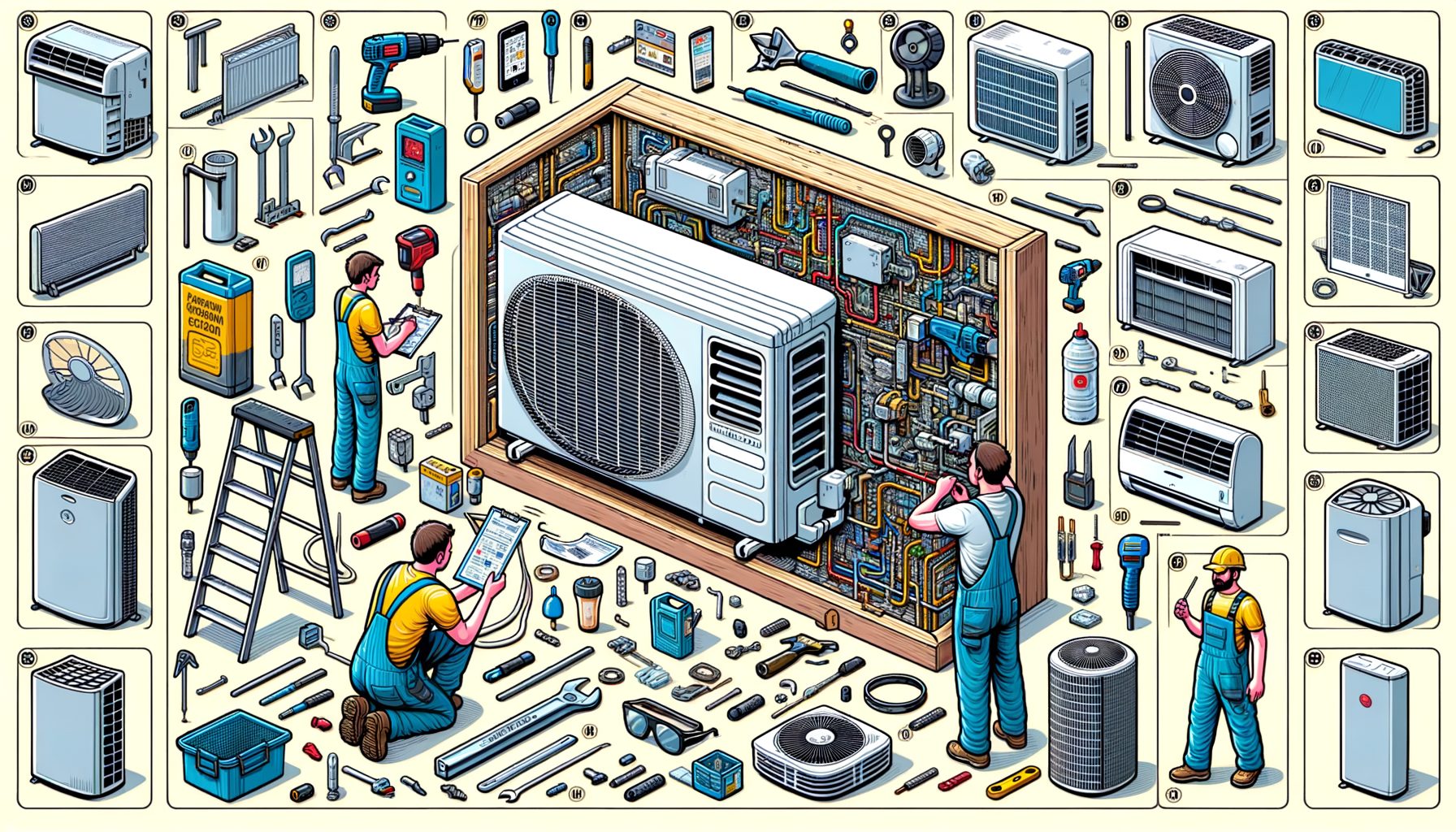
If your room is sweltering and your energy bills are climbing, installing a window air conditioner safely can feel intimidating. The main keyword here is installing a window air conditioner, and the good news is that you can do it confidently with clear steps, smart prep, and pro-level safety habits. Here’s a guide that turns a tricky task into a simple plan, so you get cool air fast—without damage, leaks, or hazards.
The Real Problem: Overheating Rooms, Hidden Risks, and Avoidable Costs
Overheating rooms are more than just uncomfortable—they can affect sleep, productivity, and health, especially during heat waves. Many people try quick fixes like fans or DIY hacks, but these often move hot air around rather than cooling it. A properly installed window AC can drop room temperatures by several degrees quickly, but poor installation creates new problems: tilted units dripping indoors, loose mounts that rattle or even fall, and unsafe power connections that can trip breakers or overheat outlets.
Safety matters. Window units are heavy (often 20–35 kg / 45–75 lb) and need secure mounting. If the frame or sash is weak, improper setup can cause the unit to shift or drop. Moisture is another risk—incorrect drainage can soak sills, grow mold, and rot wood. Electrical mistakes are equally serious: some units draw over 1,000 watts; using a power strip, sharing a circuit with high-draw appliances, or ignoring local voltage standards can lead to overheating or tripped breakers. These issues are common and avoidable.
There’s also efficiency to think about. A unit that’s too small runs constantly and still won’t cool the space; one that’s too big short-cycles, wasting energy and leaving the room clammy. The fix is to size the unit correctly and install it so it seals tight, drains properly, and has stable support. What follows focuses on practical steps and proven tips drawn from manufacturer guidance and building safety best practices to help you get reliable cooling with minimal noise, maximum efficiency, and strong safety from day one.
Choose the Right Unit and Prep Smart: Size, Features, Tools, and Measurements
Correct sizing is the foundation. Window AC capacity is measured in BTU/h (British Thermal Units per hour). A quick estimate is 20 BTU per square foot (about 215 BTU per square meter), then adjust for sun exposure, ceiling height, people count, and heat-generating devices. If your room gets intense afternoon sun or houses gaming PCs, add 10–20%. For shaded rooms, subtract 10%.
Well, here it is: a quick reference table to match room size, capacity, and typical power draw. Power draw assumes a modern CEER (combined energy efficiency ratio) around 11. Electricity prices vary—use the formula kWh × local rate to estimate costs.
| Room Size (ft² / m²) | Suggested BTU/h | Approx. Watts (BTU ÷ 11) | Est. Cost per Hour at $0.15/kWh | Typical Noise (dB) |
|---|---|---|---|---|
| 100–250 / 9–23 | 5,000–6,000 | 450–550 W | $0.07–$0.08 | 52–58 dB |
| 250–400 / 23–37 | 7,000–9,000 | 640–820 W | $0.10–$0.12 | 53–59 dB |
| 400–550 / 37–51 | 10,000–12,000 | 910–1,090 W | $0.14–$0.16 | 54–60 dB |
| 550–700 / 51–65 | 13,000–14,000 | 1,180–1,270 W | $0.18–$0.19 | 55–61 dB |
Measure your window opening (width and height) and compare it with the unit’s specs. Check the window type—most units fit double-hung windows; some models fit sliders or casements. Read the manual before buying to confirm compatibility and support bracket requirements. What’s interesting too: ENERGY STAR models can cut energy use significantly without sacrificing cooling; see the U.S. ENERGY STAR guide for details: https://www.energystar.gov/products/room_air_conditioners. Also check the DOE’s energy tips for room ACs: https://www.energy.gov/energysaver/room-air-conditioners.
Tools and materials checklist:
- Measuring tape, pencil, and level
- Screwdriver or drill/driver with bits
- Window support bracket (strongly recommended for units ≥ 8,000 BTU)
- Foam side panels (usually included), extra weatherstripping, and exterior sealant (if needed)
- L-shaped mounting brackets or sash locks (often included)
- Personal protective gear: gloves and safety glasses
Finally, power. Confirm your outlet: 110–120V in much of the Americas and Japan; 220–240V in many other regions. Never run a window AC on a power strip; use a dedicated, grounded outlet. If you’re unsure about your circuit, consult a licensed electrician.
Step-by-Step Installation: From Unboxing to First Cool Breeze
Set up the workspace. Clear the area near the window and lay out parts and screws. If the unit weighs more than 25 kg (55 lb), get help—this is safer and faster. If you have a support bracket, install it first according to its instructions; it should slightly tilt downward toward the outside to help drainage.
Step 1: Unbox carefully. Remove the unit and any protective screws or shipping brackets. Many models allow you to remove the front grille and slide out the internal chassis from the outer sleeve to lighten the load; if your manual shows this option, it makes positioning safer.
Step 2: Prep the window. Open the lower sash. Clean the sill and check the integrity of wood or vinyl. Apply thin weatherstrips where the AC frame will sit to reduce vibration and drafts.
Step 3: Fit the sleeve or unit. With assistance, lift the unit into the center of the window opening, resting it on the sill (or support bracket). Keep your hands under solid metal edges, not fins or coils. Ensure a slight outward tilt (about 3–5 mm drop per 100 mm / 1/8–1/4 inch per foot) so condensate drains outside.
Step 4: Extend side panels. Pull out the accordion panels to meet the window frame on both sides. Fasten them with the supplied screws into the frame or the provided mounting channels. Avoid overtightening—cracked panels leak air.
Step 5: Lower and secure the sash. Lower the window sash gently onto the top rail of the AC. Use the included L-brackets or sash locks to anchor the sash to the upper frame or to the AC case. That prevents accidental lifting and adds theft protection.
Step 6: Anchor the unit. Use any additional mounting holes to secure the AC to the sill per the manual. If your window frame is metal or masonry, use appropriate anchors or consult a pro for safe fastening. The goal is firm, level support with no wobble.
Step 7: Seal gaps. Use foam strips along the top and any side gaps. For outdoor gaps, exterior-grade sealant can help block rain and insects. Leave the manufacturer’s drain path open—do not seal over the drip channel or weep holes.
Step 8: Electrical check. Plug the unit directly into a dedicated, grounded outlet. Confirm the plug type. Press the test and reset buttons if your plug has a built-in GFCI. Do not use extension cords unless the manual explicitly states a heavy-duty option and you match the required gauge.
Step 9: Power on and test. Start at a low fan speed, then set cool mode. Check for vibrations, rattles, and cool air at the vent within a few minutes. Go outside and confirm water drips outdoors after 15–30 minutes of operation in humid conditions. If water pools indoors, adjust tilt slightly outward.
Seal, Drain, Support: Make It Weatherproof, Quiet, and Long-Lasting
Small installation choices have a big impact on comfort and durability. Air leaks force the AC to work harder, draw in pollen and dust, and create hot spots near the window. Go around the unit with your hand: if you feel hot air or see daylight, add foam or weatherstripping. Pay attention to the top rail where the sash meets the AC; even a thin gap can whistle and waste energy. If you live in a windy or rainy climate, use exterior-grade sealant sparingly on the outside perimeter—never blocking drain channels.
Drainage is key. Window ACs produce condensate; most designs splash some water on the condenser coil to improve efficiency, and the rest drains out. A slight outward tilt ensures water exits outdoors. If you hear sloshing or see dripping inside, recheck tilt and confirm the sill is level side-to-side. In very humid regions, the drain pan should be inspected periodically for algae or sediment and cleaned with mild soap and water.
Support brackets add safety and reduce vibration. Many manufacturers recommend a bracket for units ≥ 8,000 BTU or for any older or flexing window frames. Brackets shift weight to the building structure, easing stress on the sash. If you rent, ask your landlord before drilling; some no-drill brackets clamp under the sill instead.
Noise control matters for sleep and zoom calls. Tight seals and solid support reduce buzzing. Keep blinds and curtains from touching the unit’s chassis—they can vibrate audibly. If a specific panel rattles, add a thin foam strip or felt pad where metal meets wood. If you still hear excessive noise, check fan settings and clean the filter; clogged filters make fans work harder and louder.
Before the season starts, wash or vacuum the air filter every month; a clean filter boosts airflow and cuts energy use. At the end of the season, either remove the unit and store it upright or add an exterior cover and interior insulation panel (leaving vents open enough to prevent condensation buildup). For heat safety tips during extreme temperatures, see the CDC’s guidance: https://www.cdc.gov/disasters/extremeheat/heattips.html.
FAQs: Common Questions on Window AC Installation and Use
Q1: How much tilt is correct, and what happens if I get it wrong?
A: Aim for a slight outward tilt—about 3–5 mm per 100 mm (1/8–1/4 inch per foot). Too little tilt can cause indoor drips and mold; too much tilt can reduce performance and strain the frame. Use a level and adjust with shims or your support bracket.
Q2: Can I use an extension cord or power strip?
A: Generally no. Manufacturers and safety agencies advise plugging a window AC directly into a dedicated, grounded wall outlet. High current draw can overheat extension cords or strips. If your manual allows a heavy-duty extension with a specific gauge, match it exactly and keep it short. When in doubt, ask a licensed electrician.
Q3: What size should I buy for an oddly shaped or open-plan room?
A: Calculate the area you’re cooling (include connected spaces that don’t have doors) and size for that total. Add 10–20% capacity for strong sun, high ceilings, frequent cooking, or multiple gaming PCs. If two small rooms have separate doors, consider two smaller units for better control. ENERGY STAR’s guidance can help refine your choice: https://www.energystar.gov/products/room_air_conditioners.
Q4: Why is my unit loud, and how can I quiet it down?
A: Most window ACs operate around the mid-50s dB. Excess noise often comes from air gaps, loose sashes, or contact points that vibrate. Re-seat the unit to ensure full support, add weatherstripping where needed, and make sure blinds or cords aren’t touching the chassis. Clean the filter monthly; restricted airflow raises fan noise.
Q5: How do I maintain efficiency over time?
A: Keep the filter clean, seal gaps, and run the fan on Auto so it aligns with cooling demand. Use a smart plug or built-in Wi‑Fi to schedule cooling before you get home rather than running it all day. Shade the unit outdoors if possible (without blocking airflow). For more efficiency ideas, see the U.S. Department of Energy tips: https://www.energy.gov/energysaver/room-air-conditioners.
Conclusion: Your Safe, Cool Room Is One Careful Install Away
Here’s the bottom line: installing a window air conditioner safely is about getting a few essentials right—correct sizing, stable support, clean power, and tight sealing. You learned how to pick the right BTU capacity, prepare your tools and window, perform a safe install with a slight outward tilt, seal and support the unit to stop leaks and rattles, and keep it efficient with simple maintenance. These steps transform a hot, frustrating space into a cool, calm one while protecting your window frame, your electrical system, and your energy budget.
Now it’s your move. Measure your room, check your window type, and pick a unit that fits your space and power setup. Install a support bracket for peace of mind, follow your manual closely, and use the checklist in this guide to avoid common mistakes. If you’re between sizes, choose efficiency (ENERGY STAR) and focus on sealing and drainage—small tweaks deliver big results in comfort and cost. Share this guide with a friend who’s sweating it out, and set a reminder to clean your filter monthly once you’re up and running.
Take action today, and your next heat wave will feel like just another day. You’ve got the plan—now claim the comfort you deserve. Ready to enjoy that first cool breeze from a window AC you installed safely and confidently?
Sources:
- ENERGY STAR Room Air Conditioners: https://www.energystar.gov/products/room_air_conditioners
- U.S. Department of Energy, Room Air Conditioners: https://www.energy.gov/energysaver/room-air-conditioners
- CDC Extreme Heat Safety Tips: https://www.cdc.gov/disasters/extremeheat/heattips.html
- UL Consumer Safety Tips (Cooling): https://www.ul.com/consumer-products/cooling-fans-and-air-conditioners-safety-tips